
Stochastic patterning is the main failure point in developing representative, contextual and sovereign AI systems

We are building user-specific semantic control layers for multimodal AI

Explore ↓

Generative pipelines don’t have efficient ways
to map, understand, and leverage mental
representations at the user scale.

Every person has unique mental representations of the world.
In computational terms, distinct ways of associating concepts with pixels, and how these should be organised together.

With millions of requests processed every hour, frontier models play an active role in reducing human expression to self-reinforcing patterns that erode critical thinking, homogenise meaning, flatten creativity, and delete worldviews.

Dense white flowing lines form a complex field of changing relationships

We are building a portable semantic control layer
that breaks patterns in multimodal generative pipelines

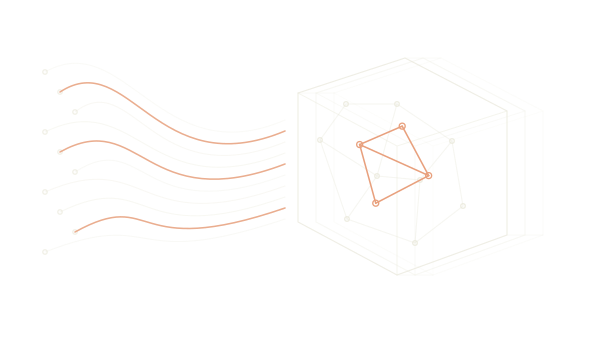
Express: semantic process illustration

Express

Make the semantic identity of users portable and inspectable.

We organise a user’s associations, distinctions and contextual rules into a persistent semantic identity.

Stored as explicit, editable records, it remains under the user’s ownership and governance, with version control and permissions defining its use, sharing and licensing.

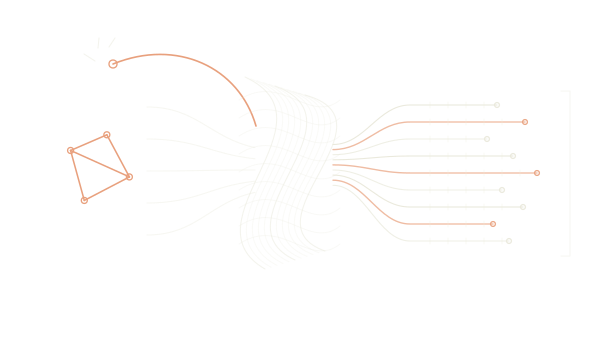
Represent: semantic process illustration

Represent

Make intent computationally actionable.

Our proprietary multimodal encoder combines each request with the relevant relationships in the user’s semantic identity to produce personalised semantic embeddings.

These give the generation process access to meanings and associations the user would otherwise have to explain in every prompt.

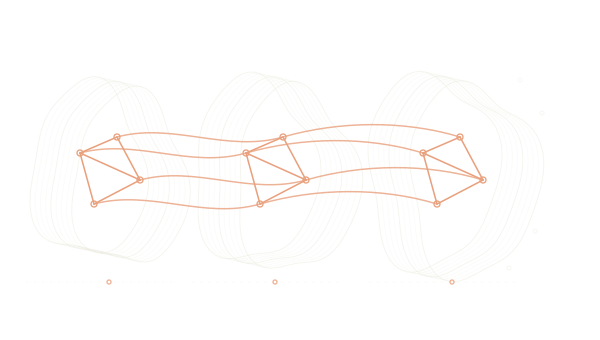
Condition: semantic process illustration

Condition

Persist semantic intent throughout the generative process.

We translate these embeddings into model-specific conditioning that keeps the user’s semantic relationships active as outputs develop.

This targets semantic drift within generation, allowing the same foundation model to express different systems of meaning while preserving a reusable identity.

We are addressing AI-driven cognitive disempowerment
across three modes of knowledge production

01

Cultural heritage and sovereign AI

Safeguarding culture, idiosyncrasies and beliefs by training local AI models is expensive and hard to scale. We are building a portable semantic layer that carries these systems of meaning across open-source models, allowing users to seamlessly adapt generative AI to their own context.

02

Creative economies and embedding licensing

As generative AI gets better at copying and reproducing creative outputs, millions of people are seeing their income reduced or lost. We are prototyping new ways of creating value by encoding intent into portable embedding licenses with provenance, versioning and attribution.

03

World models, embodied and physical AI

As developers strive to automate human, ecological and mechanical processes through artificial intelligence, the contexts we inhabit will need to adapt to the limits of this retrofitting. We take the opposite direction by ensuring contextual data is available for AI to adapt to social worlds, and not the other way around.

Interested in
knowing more?

Preview form — no information is sent or saved.